Affiliate Disclosure: This article contains affiliate links. If you make a qualifying purchase through one of these links, I may earn a commission at no additional cost to you.
As an Amazon Associate I earn from qualifying purchases.
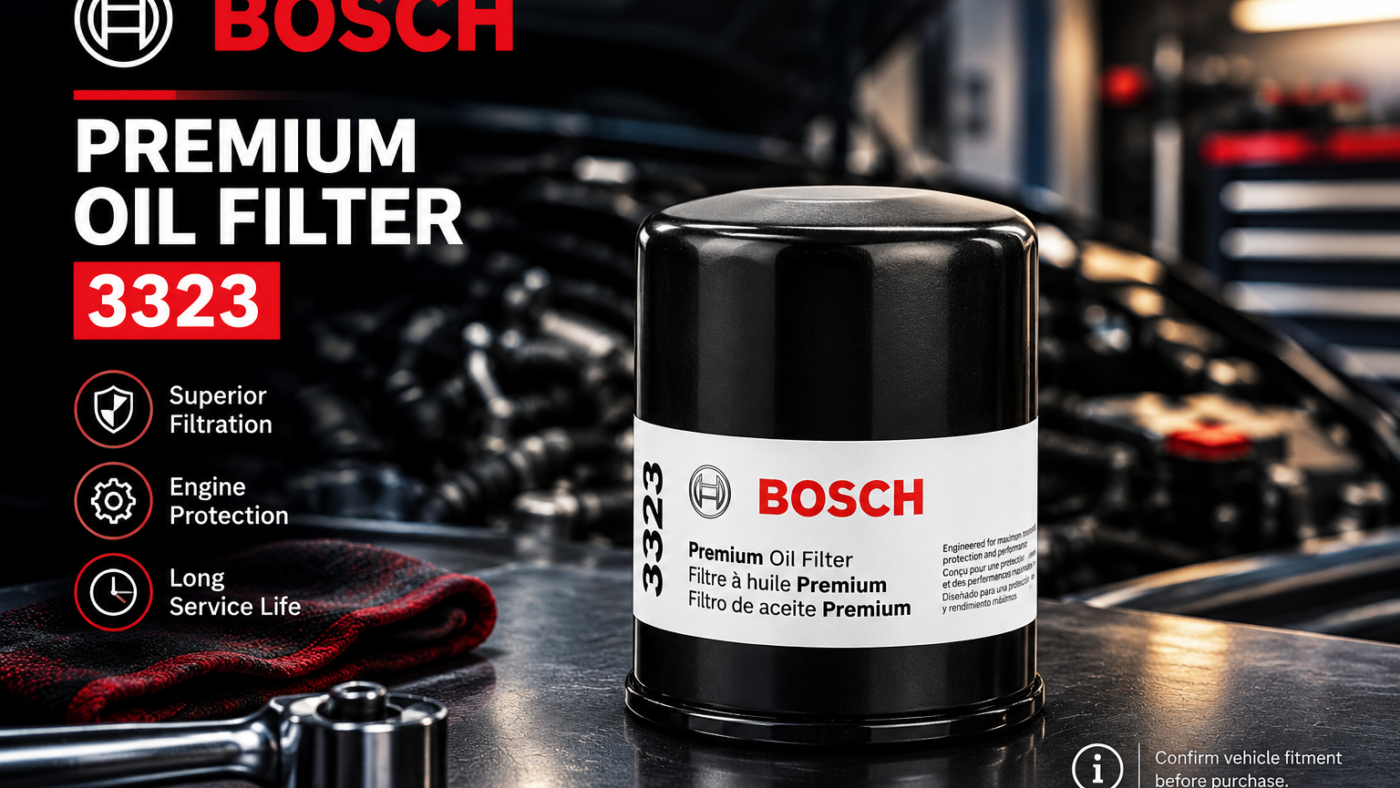
Bosch 3323 Oil Filter Overview
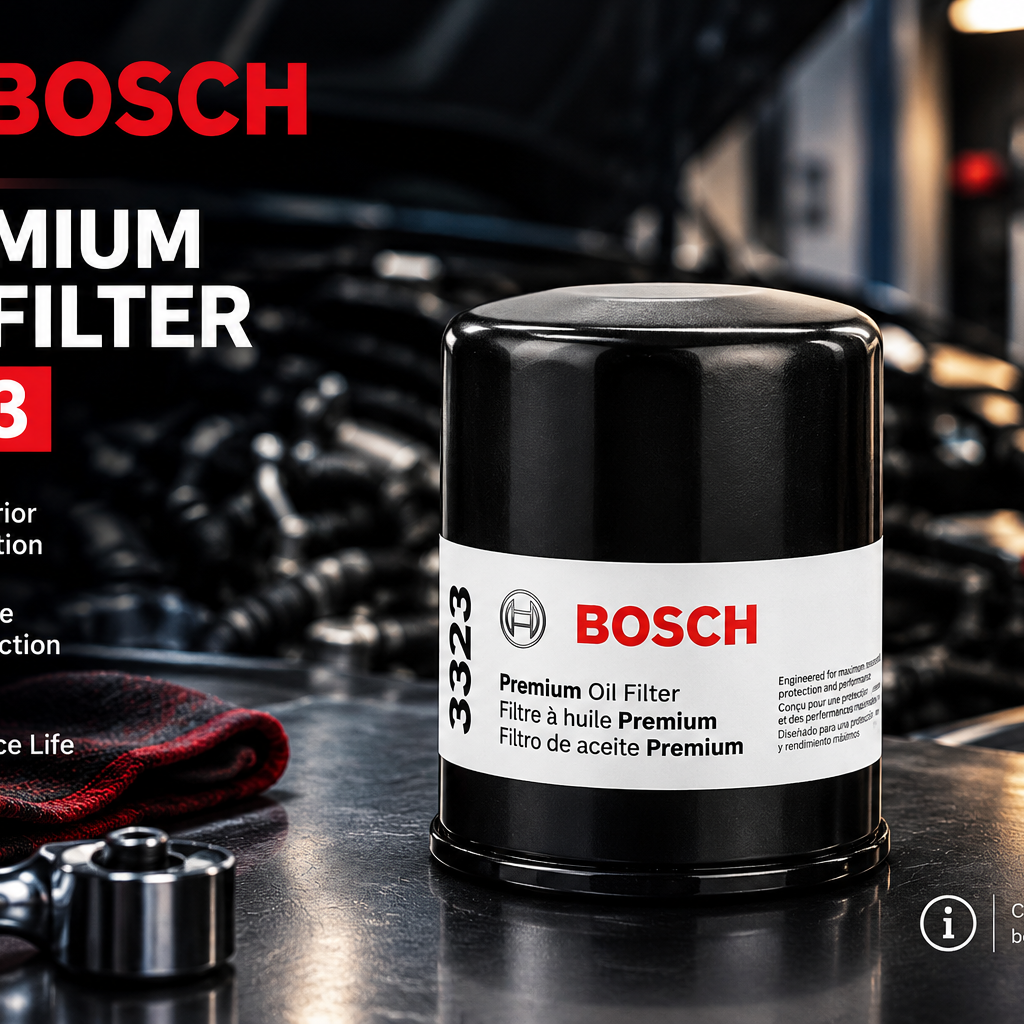
The Bosch 3323 Premium Oil Filter is a spin-on engine oil filter designed for select vehicle applications. It uses Bosch FILTECH filtration technology to help capture dirt and other contaminants carried by engine oil.
Engine oil circulates throughout the engine to lubricate moving parts and help manage heat and wear. Over time, contaminants can accumulate in the oil. The oil filter helps capture these particles and supports the engine’s lubrication system.
For drivers looking for a replacement oil filter, the Bosch 3323 is an option to consider when its part number and specifications match the vehicle manufacturer’s requirements.
This guide covers its listed features, general function, compatibility checks, and maintenance considerations. It is based on available product information and general automotive maintenance guidance; we have not personally tested or installed this filter.
Key Features of the Bosch 3323
- Brand: Bosch
- Model: 3323
- Product line: Premium Oil Filter
- Filtration technology: Bosch FILTECH
- Filter design: Spin-on oil filter
- Thread size: M20 × 1.5
- Listed outside diameter: Approximately 68 mm
- Anti-drainback valve: Silicone
- Intended application: Select compatible vehicles
- Part number: 3323
Specifications are based on available product and catalog information. Confirm the current listing and the filter requirements for your specific engine before purchasing.
What Is Bosch FILTECH Technology?
Bosch markets its FILTECH filtration media as a way to capture and retain dirt and particles in engine oil before they continue circulating through the engine.
The purpose of an oil filter is to remove contaminants while allowing oil to flow through the lubrication system at the rate required by the engine. The filter must provide the correct fit, sealing, and flow characteristics for the intended application.
Bosch’s product information states that the FILTECH media can capture up to 14 grams of dirt and particles. This is a manufacturer claim, not an independently verified test result from this article.
Potential Benefits
Helps capture oil contaminants
The filter is designed to trap dirt and particles carried by engine oil. Effective filtration helps reduce the amount of contaminant material circulating through the lubrication system.
Silicone anti-drainback valve
The listed silicone anti-drainback valve helps prevent oil from draining out of the filter when the engine is switched off. This supports oil availability when the engine is started again.
Actual behavior depends on the filter’s condition, installation, and compatibility with the engine.
Designed for spin-on replacement
The Bosch 3323 uses a spin-on design. On compatible vehicles, this type of filter screws onto a designated mounting point and seals against the engine’s filter housing or mounting surface.
Correct thread size alone does not guarantee compatibility. The filter’s dimensions, gasket, bypass characteristics, and application must also match the engine requirements.
Suitable for routine maintenance
Replacing the oil filter at the interval specified by the vehicle manufacturer helps maintain the engine’s lubrication system. The Bosch 3323 may be a suitable replacement when the exact application is confirmed.
These points describe the product’s intended functions and general oil-filter benefits. They are not claims of independent performance testing.
Vehicle Compatibility: Does the Bosch 3323 Fit Your Car?
The Bosch 3323 is listed for select vehicles from manufacturers including Acura, Honda, Nissan, Infiniti, and other brands. However, not every model or engine from these manufacturers uses the same oil filter.
Compatibility may depend on:
- Vehicle make and model
- Model year
- Engine size and engine code
- Trim or specific vehicle configuration
- Manufacturer-specified oil-filter requirements
Before ordering, follow these steps:
- Identify your vehicle. Record its make, model, year, and engine details.
- Check the exact part number. Confirm that Bosch 3323 is listed for your application.
- Consult reliable fitment information. Check your owner’s manual, the vehicle manufacturer’s parts catalog, or a reputable parts fitment tool.
- Verify the specifications. Compare the thread, gasket sealing surface, filter dimensions, and required bypass characteristics.
- Ask a professional if uncertain. A qualified parts specialist or mechanic can help confirm the correct filter.
Do not choose an oil filter solely because its thread appears to match. An incorrectly specified filter may fail to seal or may not provide the oil-flow characteristics required by the engine.
When Should You Replace Your Oil Filter?
Oil-filter replacement intervals vary by vehicle, engine, oil type, and driving conditions.
For most routine maintenance, follow the oil-change schedule in your owner’s manual. Many vehicles require the filter to be replaced during an oil change, but the exact requirements depend on the manufacturer’s instructions.
Consider the following maintenance practices:
- Follow the recommended oil and filter service interval.
- Use an oil filter approved for the specific engine.
- Replace damaged or incorrectly installed filters promptly.
- Inspect for oil leaks after maintenance.
- Check the engine oil level according to the vehicle manufacturer’s instructions.
If the oil warning light illuminates or you notice an oil leak, stop safely and follow the vehicle manufacturer’s guidance. Do not assume that replacing the filter alone will resolve an oil-pressure problem.
Installation Considerations
Oil-filter installation procedures differ between vehicles. If you are replacing the filter yourself, consult the service instructions for your exact engine.
General precautions include:
- Park the vehicle on a stable surface and secure it properly.
- Allow hot engine components and oil to cool sufficiently before working.
- Use the correct tools and follow the specified procedure for removing the old filter.
- Inspect the mounting surface and ensure the old gasket has not remained attached.
- Lubricate the new gasket if instructed by the manufacturer.
- Tighten the filter according to its instructions rather than overtightening it.
- Refill the engine with the specified oil and quantity.
- Check the oil level and inspect for leaks using the manufacturer’s recommended procedure.
Used engine oil can be hot, and working underneath an improperly supported vehicle can cause serious injury. If you lack the necessary tools or experience, have a qualified mechanic perform the service.
Dispose of used oil and the old filter according to local requirements.
Where to Buy the Bosch 3323 Oil Filter
You can check the current product listing on Amazon for availability, pricing, seller information, and product details.
Before purchasing, confirm that the listing identifies the Bosch 3323 model and that it is compatible with your exact vehicle. Product details, sellers, and availability may change.

Frequently Asked Questions
What does the Bosch 3323 oil filter do?
It filters engine oil to help capture dirt and other contaminants before the oil continues circulating through the engine’s lubrication system.
What is the thread size of the Bosch 3323?
Available product information lists an M20 × 1.5 thread. Thread size alone is not sufficient to confirm fitment.
Does the Bosch 3323 fit all Honda vehicles?
No. It is listed for select applications, but compatibility depends on the specific model, year, engine, and manufacturer requirements. Always verify fitment before ordering.
What does the anti-drainback valve do?
The anti-drainback valve helps prevent oil from draining out of the filter when the engine is off. This helps retain oil in the filter between engine operation cycles.
How often should I replace this oil filter?
Follow the maintenance interval specified in your vehicle owner’s manual. The recommended interval depends on the engi
Leave A Comment