Affiliate Disclosure: This article contains affiliate links. If you make a qualifying purchase through one of these links, I may earn a commission at no additional cost to you.
As an Amazon Associate I earn from qualifying purchases.
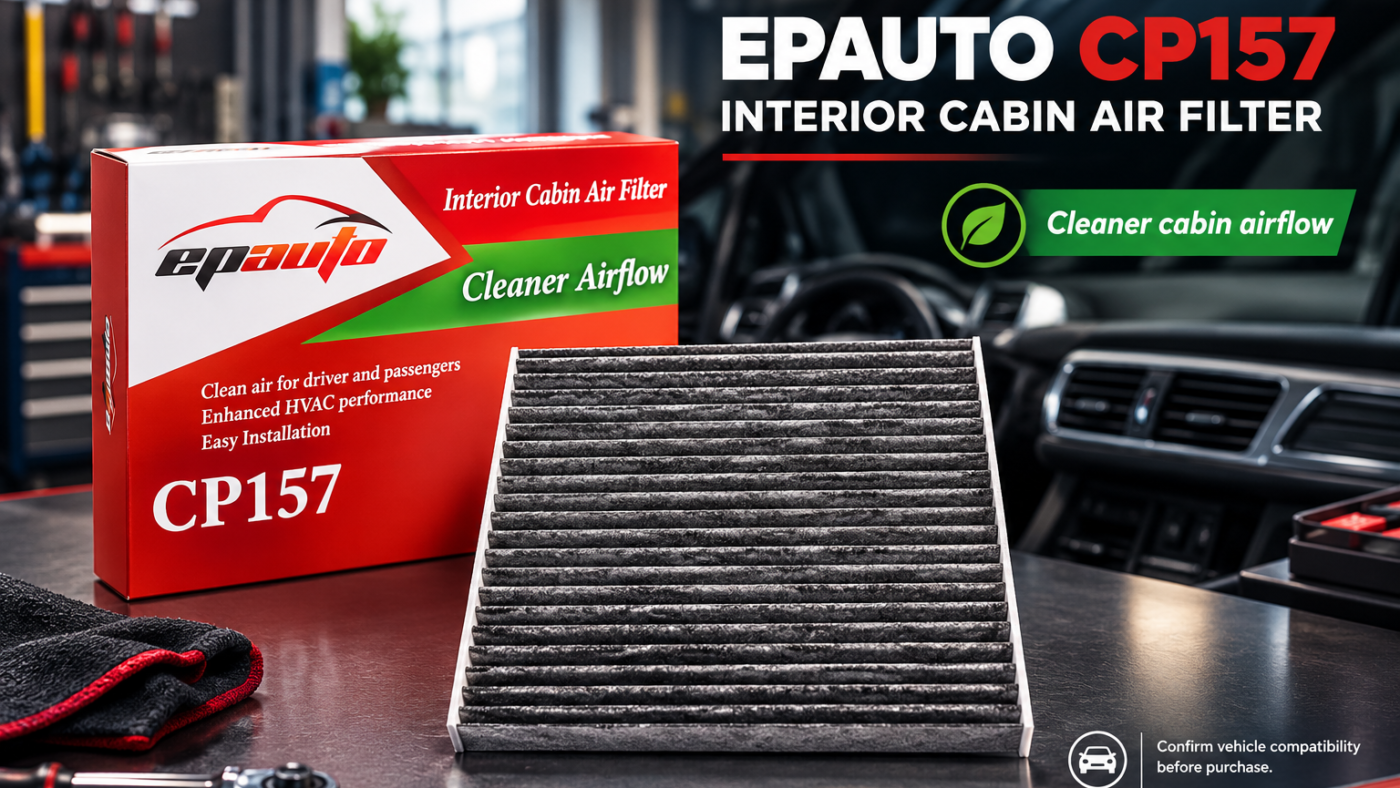
EPAuto CP157 Cabin Air Filter Overview
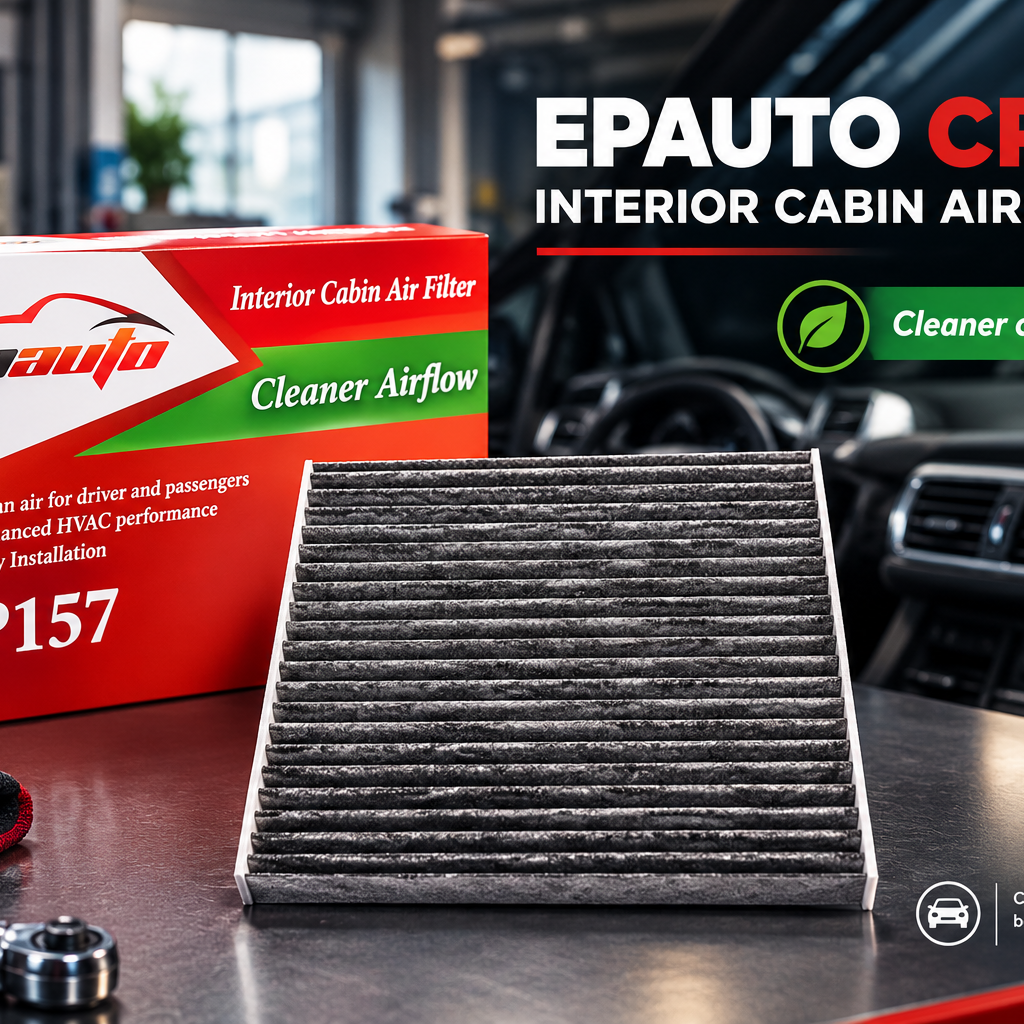
The EPAuto CP157, also identified as CF12157, is an activated carbon cabin air filter designed for select Toyota, Lexus, Subaru, and Mazda vehicles. It fits inside the vehicle’s cabin air filtration system and helps filter air entering the passenger compartment through the heating, ventilation, and air conditioning (HVAC) system.
Unlike an engine air filter, which helps protect the engine from airborne contaminants, a cabin air filter is intended to help improve the air supplied to the vehicle’s interior.
The EPAuto CP157 is marketed with filtration media containing activated carbon and soda-based material. If you’re looking for a replacement cabin air filter, this model may be worth considering when its part number matches your vehicle’s requirements.
This guide covers its listed features, potential benefits, compatibility considerations, and replacement advice. We have not personally tested or installed this product.
Key Features of the EPAuto CP157 (CF12157)
- Brand: EPAuto
- Model: CP157
- Filter reference: CF12157
- Product type: Cabin air filter
- Filter media: Activated carbon and soda-based material, according to product listings
- Listed dimensions: Approximately 8.5 × 7.28 × 1.1 inches
- Intended application: Selected Toyota, Lexus, Subaru, and Mazda vehicles
- Replacement references: Includes cross-references to selected Toyota, Subaru, Mazda, and aftermarket filter numbers
Specifications and cross-reference information should be checked against the current product listing before ordering.
What Does a Cabin Air Filter Do?
A cabin air filter helps capture airborne particles before air enters the vehicle’s passenger compartment through the HVAC system. Depending on the filter design, it can help trap dust, pollen, and other particles carried in outside air.
Over time, contaminants accumulate in the filter media. A clogged, damaged, or excessively dirty filter may restrict airflow through the ventilation system and can contribute to unpleasant odors.
Replacing the cabin air filter according to the vehicle manufacturer’s maintenance guidance helps keep the ventilation system working as intended.
What Is the Purpose of Activated Carbon?
Activated carbon is a porous material used in certain filters to adsorb some gases and odor-causing compounds. This is different from ordinary particle filtration, which physically captures particles in the filter media.
The EPAuto CP157 is advertised as containing activated carbon and soda-based material to help freshen incoming cabin air.
However, performance depends on the filter’s design, the substances present, the amount of filtration media, and the operating conditions. This product should not be assumed to remove every gas, odor, or airborne contaminant, and it is not a substitute for addressing the source of persistent fumes or poor air quality.
Potential Benefits of the EPAuto CP157
Helps filter incoming cabin air
The filter is designed to capture airborne particles entering the vehicle’s HVAC system. This can help reduce the amount of dust and other debris carried into the passenger compartment.
Activated carbon filtration media
The carbon-containing media is intended to help reduce certain odors and adsorb some gaseous compounds. Actual results vary depending on the contaminant and operating conditions.
Supports HVAC maintenance
A cabin air filter that is clogged or damaged can interfere with airflow. Replacing it when required can help the ventilation system deliver air as intended.
Vehicle-specific replacement design
The CP157 is listed for selected vehicles from several manufacturers. Confirming the exact application helps ensure the filter fits correctly and seals properly within the cabin air filter housing.
These are general product functions and intended benefits, not claims based on independent testing.
Vehicle Compatibility: Does the CP157 Fit Your Car?
The EPAuto CP157 (CF12157) is listed for selected vehicles in the following families:
- Toyota: Certain Camry, Corolla, RAV4, Prius, Highlander, Avalon, Sienna, and other models.
- Lexus: Certain ES, NX, RX, UX, and TX models.
- Subaru: Certain Ascent, Crosstrek, Impreza, Legacy, and Outback models.
- Mazda: Certain CX-9 models.
This list is not a guarantee of compatibility with every model year or trim. Some applications have specific production-year or manufacturing-location restrictions.
Before purchasing:
- Identify your vehicle. Confirm its make, model, model year, and trim.
- Check the engine and vehicle configuration where relevant. Different versions of the same model may use different parts.
- Verify the filter reference. Confirm that CP157 or CF12157 is listed for your specific vehicle.
- Check the manufacturer’s parts information. Use your owner’s manual, an appropriate fitment catalog, or a reliable parts professional.
- Compare the old filter if available. Check its part number, shape, and dimensions.
Do not rely on a general compatibility list alone. If the replacement filter does not fit securely or the cover does not close properly, do not force it into place.
When Should You Replace a Cabin Air Filter?
The recommended replacement interval depends on your vehicle and driving conditions. The product listing suggests replacing this filter about every 12 months or 12,000 miles, but your vehicle manufacturer’s maintenance schedule should take priority.
You may need to inspect the filter sooner if you frequently drive on dusty roads or in areas with heavy airborne debris.
Common reasons to inspect or replace a cabin air filter include:
- Reduced airflow from the vents
- Persistent musty odors from the ventilation system
- Visible dirt or debris on the filter
- A damaged or incorrectly fitted filter
- Reaching the service interval specified by the vehicle manufacturer
Reduced airflow or unpleasant odors can also have other causes. If replacing the filter does not resolve the issue, the HVAC system may need further inspection.
Installation and Maintenance Tips
On many vehicles, the cabin air filter is located behind the glove compartment or beneath the dashboard. The exact location and replacement procedure vary by vehicle.
Before replacing the filter:
- Consult the owner’s manual for the correct procedure.
- Turn off the vehicle before beginning work.
- Remove the access panel or glove compartment only as instructed.
- Check the airflow-direction arrows on the replacement filter.
- Install the filter in the correct orientation.
- Ensure the filter sits evenly and the housing closes securely.
Some vehicles have delicate plastic clips or limited access. If you’re unsure how to remove the housing without damaging it, consult a qualified mechanic.
Avoid using compressed air or washing a disposable cabin filter unless the manufacturer specifically permits it.
Where to Buy the EPAuto CP157 Cabin Air Filter
You can check the current Amazon listing for product details, available pack sizes, pricing, seller information, and delivery options.
Before purchasing, confirm that the listing identifies the EPAuto CP157 or CF12157 and that the filter is compatible with your exact vehicle. Product details, availability, and seller information may change.

Frequently Asked Questions
What is the EPAuto CP157 (CF12157)?
It is an activated carbon cabin air filter designed for selected Toyota, Lexus, Subaru, and Mazda vehicles. It filters air entering the passenger compartment through the HVAC system.
Is the CP157 an engine air filter?
No. It is a cabin air filter. An engine air filter serves a different purpose by filtering air entering the engine’s intake system.
Does activated carbon help reduce odors?
Activated carbon can adsorb certain gases and odor-causing compounds. The results depend on the substances involved and the filter’s design. It does not eliminate every odor or contaminant.
How often should I replace the filter?
The product listing suggests approximately every 12 months or 12,000 miles. Follow your vehicle manufacturer’s maintenance schedule, which may recommend a different interval.
Does this filter fit every Toyota or Lexus?
No. Compatibility depends on the specific vehicle, model year, and configuration. Verify the CP157 or CF12157 reference against reliable fitment information before ordering.
Have you personally tested this product?
No. We have not personally tested or installed the EPAuto CP157. This article is based on available product listing information and general cabin air filter maintenance guidance.
Final Thoughts
The EPAuto CP157 (CF12157) is an activated carbon cabin air filter intended for selected Toyota, Lexus, Subaru, and Mazda vehicles. Its primary purpose is to filter incoming cabin air, while its carbon-containing media is designed to help address certain odors and gaseous compounds.
Before buying, verify the part number and vehicle fitment, follow your manufacturer’s maintenance recommendations, and make sure the replacement is installed in the correct orientation.
Disclaimer: This article is for general informational purposes only. Product specifications, availability, and compatibility information may change. Always verify fitment before purchasing or installing a replacement part.
Leave A Comment